The DV Launchpad Just Got a Major Upgrade
The DV Launchpad has evolved from a cluster creation tool into the public platform for the Obol ecosystem.

The DV Launchpad now highlights professional operators with ENS names, live validator metrics, shareable operator profiles, and a new Obol Positions page where capital allocators can see every cluster their address participates in, which role it holds, and claimable rewards, all from a single dashboard.
What the Launchpad Has Become
The DV Launchpad started as a cluster creation tool. Operators used it to coordinate and create their distributed validator clusters, as well as claim rewards. That was it. If you weren't running a cluster or claiming incentives, the Launchpad had no use for you.
That's changed. Over the past few months, we've shipped a series of upgrades that transform the Launchpad into a public platform for discovering, evaluating, and tracking the entire Obol ecosystem. Here's what's new.

See Who's Running the Infrastructure
The DV Launchpad is now a public showcase of the largest operators in the Obol ecosystem. Where it used to show anonymous hex addresses, it now shows ENS names with PFP avatars resolved on-chain.
The Launchpad now gives you a high-level view into the Obol ecosystem across four metrics: total value staked, daily rewards, number of operators, and total clusters. That kind of visibility has never been available before in a simple, easy-to-read dashboard like this.
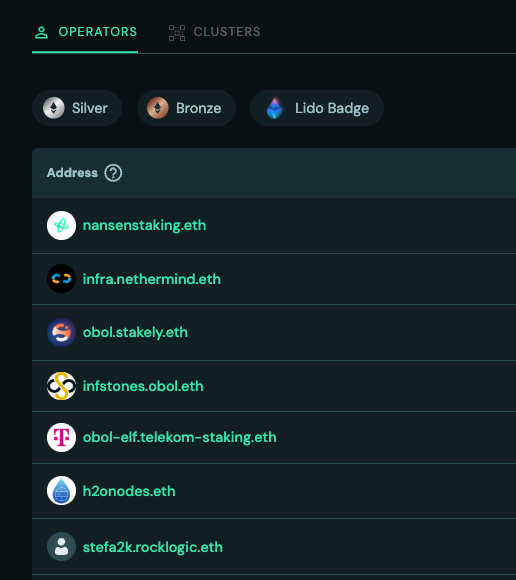
When you create a link to an operator's page, it generates a rich preview with your name, credentials, and active stake. Every operator page is now a shareable moment.
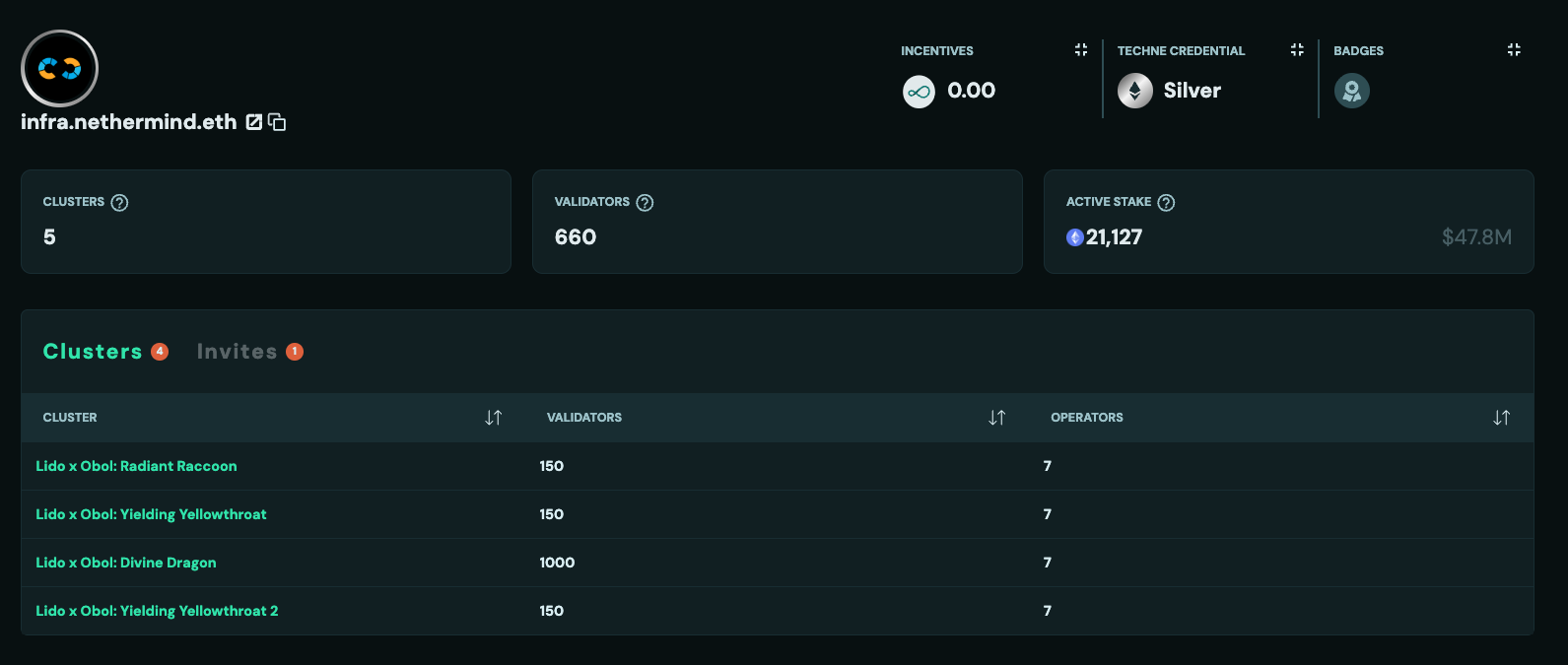
Operators can also see how they perform relative to their cluster peers through intra-cluster peer scores, a signal that adds accountability within clusters.
Introducing the Obol Positions Page: Every Role. One View.
Distributed validator clusters are multi-party arrangements. There's the operator(s) running the cluster, the entities providing the capital, the owner of the withdrawal address, the fee recipient address, and the participants in any reward splitter contracts. Each of these parties is a stakeholder with a real economic position in the validator.
Until now, operators were the only stakeholder with any visibility on the Launchpad. If you control a withdrawal address across 50 clusters, the Launchpad showed you nothing. If you were a fee recipient, you tracked your positions through Etherscan or spreadsheets.
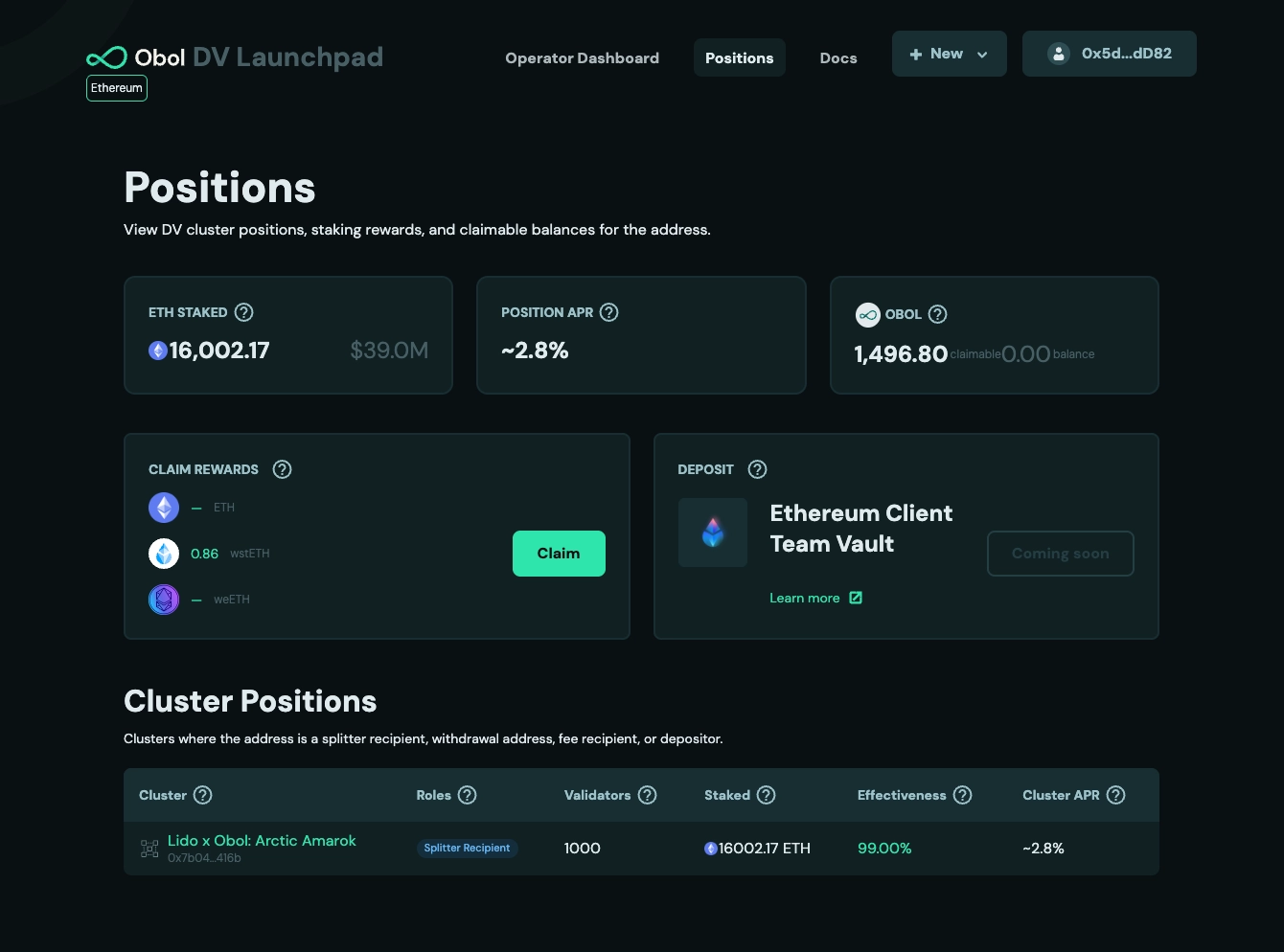
The Obol Positions page changes that. For any Ethereum address, you can now see which clusters the address participates in, which role it holds, what the total stake is, and what's claimable.
Validators have stakeholders. Now those stakeholders can see their positions.
What's on the Page
The page has two main sections:
The stats bar gives you a high-level portfolio summary: the total ETH staked across all clusters where your address holds a role, the ETH APR, the balance of claimable Obol tokens, and the total ETH claimable across all the clusters you participate in.
The positions table is the core of the page, showing every role and every cluster your address is associated with. You get a clear view of the cluster names, which role your address holds, how many validators each cluster is running, total ETH staked, effectiveness, and APR.
No Wallet Required
The Obol Positions page is transparent and shareable. Visit /positions?address={address} directly to look up any address - no wallet connection required. Staking positions should be as transparent as Ethereum itself, and the Obol Positions page leans into that. Wallet connection is only required to perform claim or deposit actions.
There's More to a Validator Than Its Public Key
The staking ecosystem already has useful dashboards that provide strong operator performance analytics: attestations, proposals, effectiveness, and beacon chain explorers that offer withdrawal addresses, deposit history, and pool tagging. These tools answer an important question: how is this validator performing?
The Launchpad now answers two different questions. Who's running the infrastructure and what type of stakeholder is this address in the ecosystem.
These are complementary perspectives. Performance dashboards tell you how a validator is doing. The Launchpad tells you who's behind it and what your position is in it.
Built For Validators With Stakeholders
Distributed validators are no longer just a solution for protocol decentralization or Squad Staking, they're being adopted as part of the institutional wave!
Validators now have many different stakeholders across many different addresses. With these Launchpad upgrades, each of those stakeholders gets visibility into which position their address holds within the Obol ecosystem.
The DV Launchpad is what you see when you arrive. The Obol Positions page is where you go to understand your role. Together, they make the strength of the Obol network visible and verifiable.
Explore the upgraded DV Launchpad at launchpad.obol.tech.
Look up your positions at launchpad.obol.tech/positions?address={your-address}.