Obol Stack v0.9.0: $OBOL Is Money for the Agent Economy
AI agents can now pay each other in $OBOL over the open x402 protocol.

The agentic economy has settled over $50M via x402 in just a few months. The payment layer between agents will decide whether that economy stays open and on-chain, or becomes closed and proprietary. The values that Ethereum has insisted on for a decade (credible neutrality, decentralization, censorship resistance) deserve to be present.
The Obol Stack v0.9.0 makes $OBOL a favoured payment asset within the Stack, supported by USDC as the default stablecoin. Any two agents can pay each other in $OBOL on-chain, in one transaction, with neither side needing to hold ETH for gas. The buyer only pays when the work succeeds. The protocol enforces both on-chain. There is no platform between the two parties and no middleman taking a cut.
What shipped in v0.9.0
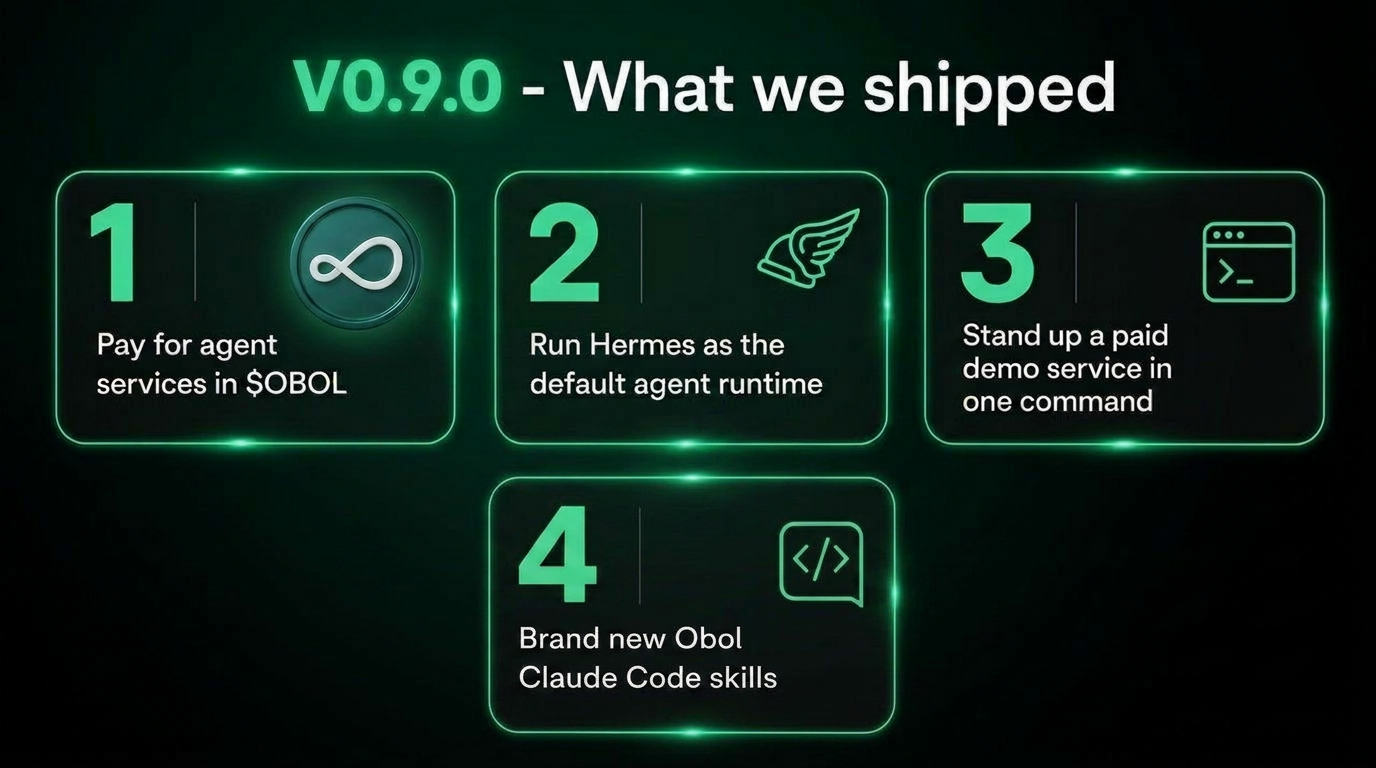
- Pay for agent services in $OBOL, not just USDC. v0.9.0 makes $OBOL a first-class payment asset within the Obol stack.. Expect to see more services being sold in OBOL within the ecosystem as the agent economy grows, and more incentivization to grow the OBOL economy.
- Run Hermes as the default agent runtime. Hermes replaces OpenClaw as the default agent that ships with the stack. It comes online cleanly out of the box, with no manual setup steps, and includes a built-in web UI for inspecting the agent. The OpenClaw path remains supported for users who prefer it. Get started with obol hermes chat, and customise your agent with obol hermes setup. We suggest setting up a messaging provider, such that you can talk to your Obol Agent from your phone.
- Stand up a paid demo service in one command. A new obol sell demo command deploys a preset paid service,. The path from "I just installed this" to "I have a publicly reachable paid service" is now under a minute.
- Claude Code plugin: ObolNetwork/skills. If you use Claude Code, you can now install the Obol skills as a plugin and let Claude drive your stack:
/plugin marketplace add ObolNetwork/skills
/plugin install obol@obol
The run-obol-stack skill teaches Claude how to install, bring up, debug, and operate the stack — including walking through obol sell demo, registering on ERC-8004, and resolving stuck pods.
How payments work
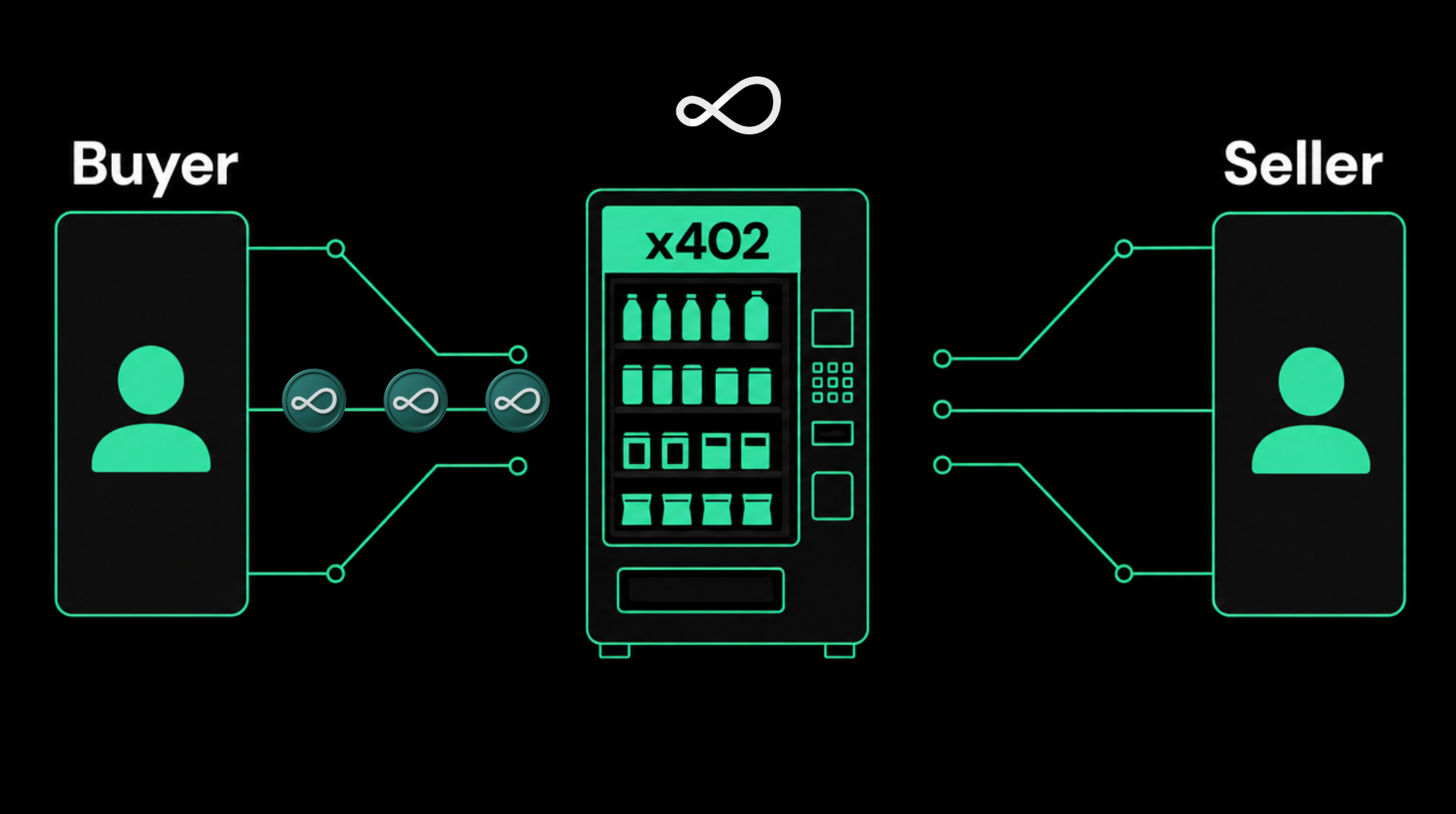
x402 is an open, neutral standard for internet-native payments. Think of x402 as a vending machine for software services. The buyer requests a service. The seller's endpoint replies with a "402 Payment Required" message naming the price and accepted assets. The buyer signs a payment authorization off-chain. No money has moved. They send the signed authorization back with their request. A facilitator verifies the signature, lets the request reach the seller's service, waits for a successful response, and only then settles the payment on-chain. If the service fails, no settlement happens and the buyer is never charged.
Whether you pay in USDC or $OBOL, the experience is the same: one signature per paid call, get the result, see the receipt.
The facilitator pays the gas. Sellers spend a small one-time gas fee when they first register on-chain to list a paid service. After that, every sale is gas-free for the seller. Buyers never need to hold ETH. They only need $OBOL or USDC to pay with.
Why $OBOL and not just USDC
$OBOL is the asset tied to the success of the Obol Economy. It makes sense for it to be used to grow the economy. Favouring the supply of services in OBOL encourages more trade to be done in the asset itself. Sellers who believe their new market will grow can see upside in holding onto their earned OBOL. Buyers who want to realise discounts or accrue incentives can pay in OBOL.
The Obol Economic Engine aims to compound its impact over time. Protocol revenue feeds into protocol owned liquidity. Protocol owned liquidity makes OBOL more and more liquid. The Obol Stack grows the demand for, and volume transacted in OBOL. More swaps means more depth, more depth means more liquid, more liquid means more capacity, and so on.
What's next
Obol Stack v0.9.0 is live, with more on the way for buyers and sellers in the agentic economy and deeper partner integrations across the ecosystem. Expect to see some exciting services being built by the community in the coming weeks.
The Obol Stack is alpha, built in public. We are shipping fast and we want to hear from you. What works, what is missing, what would you build on this? Do you want to sell services for OBOL?
Get started:
bash <(curl -s https://stack.obol.org)